
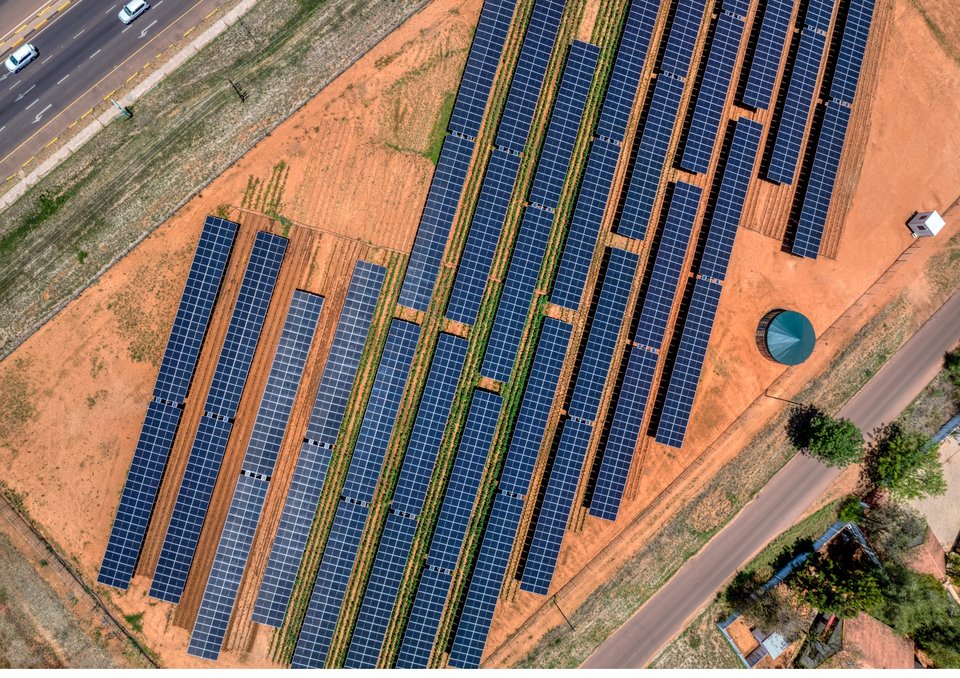
Africa’s energy landscape is undergoing a decisive structural shift as solar power installations surged to a record 4.5 gigawatts (GW) in 2025, a 54% year-on-year increase that has outperformed even the most optimistic industry forecasts. According to the “African Solar PV Market Outlook 2026–2029” released by the Global Solar Council (GSC), this momentum is being fueled by a “dual transition” where large-scale government utility projects are now being matched by a massive, privately-funded wave of distributed rooftop and commercial systems.
The capital inflow into the sector reflects a broadening of the market beyond traditional early adopters. While South Africa maintained its pole position with 1.6 GW of new capacity, followed by Nigeria (803 MW) and Egypt (500 MW), the number of countries installing more than 100 MW annually doubled from four to eight in just twelve months. This diversification is seen as a critical buffer against regional economic volatility, signaling that solar is no longer a niche experimental technology but a primary pillar of the continent’s industrial and residential energy strategy.
“Africa’s solar boom is remarkable, showing just how quickly we can deploy clean energy when technology, demand and ambition come together,” says Zoisa North-Bond, CEO of Octopus Energy Generation, a key contributor to the report. “Solar is becoming more accessible, more efficient, and – most importantly – cheaper every year.”
Despite the record-breaking pace, the report highlights a significant “financing gap” that threatens to bottleneck future expansion. While private clean-energy investment in Africa has more than doubled since 2019—reaching nearly $40 billion in 2024—the vast majority of this capital remains earmarked for utility-scale projects. Experts warn that current financing frameworks are poorly suited for the distributed solar market, which requires smaller ticket sizes and local currency lending to serve the 600 million Africans still living without grid access.
The disparity between potential and reality remains a central theme for institutional investors. According to the International Energy Agency (IEA), Africa possesses 60% of the world’s prime solar resources yet accounts for less than 1% of global installed capacity. To bridge this divide, the GSC report calls for urgent regulatory reforms, including streamlined licensing and the integration of battery energy storage systems (BESS), which have seen costs drop to a point where “round-the-clock” solar is now cost-competitive with diesel and gas in many African markets.
Looking toward the 2026–2029 horizon, the outlook suggests a compound annual growth rate (CAGR) of 21%, with the potential for Africa to add over 33 GW of new capacity by the end of the decade. This trajectory would see solar overtake oil-fired power generation across the continent, provided that governments can successfully pivot their grid infrastructure to handle the influx of decentralized, renewable energy. For the Business Times reader, the message is clear: the “Age of Electricity” in Africa is being written in silicon.
